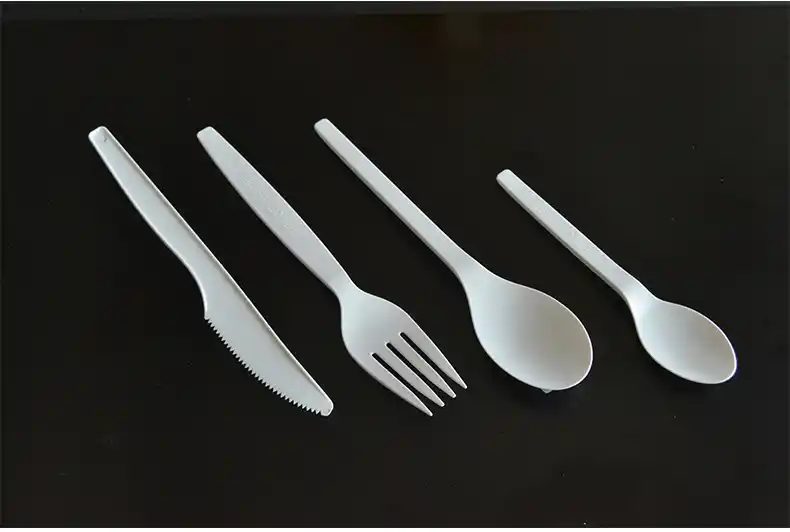
The impact of PET on our living environment

PET, full name Polyethylene terephthalate, is a thermoplastic. It has excellent physical properties, such as high strength, high toughness, high transparency, etc., but also has good chemical stability, oil resistance and weather resistance. These characteristics make PET materials have a wide range of applications in the field of packaging, such as beverage bottles, food packaging and so on. The production of PET material is mainly through esterification reaction and polycondensation reaction, polymerization of terephthalic acid (PTA) and ethylene glycol (EG) into PET, and then through melt spinning or extrusion molding to get the final PET product. The application of PET material is not only limited to the field of packaging, but also widely used in many fields such as chemical pharmaceutical packaging, and it is a common plastic material.
Polyethylene terephthalate is the most important variety of thermoplastic polyester, commonly known as polyester resin. It is prepared by transesterification of dimethyl terephthalate with ethylene glycol or esterification of terephthalate with ethylene glycol, and then polycondensation reaction. Together with PBT, they are collectively known as thermoplastic polyester, or saturated polyester.
In 1946, the United Kingdom published the first patent for the preparation of PET, and in 1949, the British ICI Company completed the pilot test, but after the United States DuPont purchased the patent, the production plant was established in 1953, and the industrial production was the first in the world. Early PET is almost used in synthetic fibers (commonly known as dacron, dacron). Since the 1980s, PET has had a breakthrough development as an engineering plastic, and has successively developed nucleating agents and crystallization promoters. At present, PET and PBT together as thermoplastic polyester have become one of the five major engineering plastics.
PET is divided into fiber grade polyester chips and non-fiber grade polyester chips.
① Fiber grade polyester is used to manufacture polyester staple fiber and polyester filament, which is the raw material for processing fibers and related products of polyester fiber enterprises. Polyester is the most productive variety of chemical fiber.
② Non-fiber grade polyester also bottle, film and other uses, widely used in the packaging industry, electronic appliances, medical and health, construction, automotive and other fields, of which packaging is the largest non-fiber polyester application market, but also the fastest growing PET field.
A large number of used as fiber, and engineering plastic resin can be divided into non-engineering plastic grade and engineering plastic grade two categories, non-engineering plastic grade is mainly used for bottles, films, sheets, baking food containers and so on.
PET is a milky white or light yellow, highly crystalline polymer with a smooth, shiny surface. It has excellent physical and mechanical properties in a wide temperature range, the use temperature can reach 120℃, excellent electrical insulation, even at high temperature and high frequency, its electrical properties are still good, but poor corona resistance, creep resistance, fatigue resistance, friction resistance, dimensional stability are very good.
PET has ester bond, decomposition will occur under the action of strong acid, strong alkali and water steam, resistance to organic solvents, good weather resistance. The disadvantages are slow crystallization rate, difficult molding processing, high molding temperature, long production cycle and poor impact performance. Generally through strengthening, filling, blending and other methods to improve its processability and physical properties, glass fiber reinforcement effect is obvious, improve the rigidity of resin, heat resistance, drug resistance, electrical properties and weather resistance. However, the disadvantages of slow crystallization speed still need to be improved, and means such as adding nucleating agents and crystallization accelerators can be adopted. Flame retardancy and self-extinguishing property of PET can be improved by adding flame retardants and flame retardants.
PET is a milky white or light yellow highly crystalline polymer with a smooth and glossy surface. Creep resistance, fatigue resistance, friction resistance and dimensional stability is good, small wear and high hardness, with the greatest toughness in thermoplastics: good electrical insulation performance, little affected by temperature, but poor corona resistance. Non-toxic, weather resistance, good stability against chemicals, low water absorption, resistance to weak acids and organic solvents, but not heat resistant water immersion, not alkali resistance.
PET resin has high glass transition temperature, slow crystallization rate, long molding cycle, long molding cycle, large molding shrinkage, poor dimensional stability, brittle crystallization molding, low heat resistance.
Through the improvement of nucleating agents and crystallizing agents and glass fiber reinforcement, PET has the following characteristics in addition to the properties of PBT.
1. Thermal deformation temperature and long-term use temperature are the highest in thermoplastic general engineering plastics.
2. Because of the high heat resistance, the enhanced PET is impregnated for 10s in the solder bath at 250 ° C, almost without deformation or discoloration, which is especially suitable for the preparation of electronic and electrical parts for solder welding.
3. The bending strength is 200MPa, the elastic modulus is 4000MPa, the creep resistance and fatigue are also very good, the surface hardness is high, and the mechanical properties are similar to thermosetting plastics.
4. Since the price of ethylene glycol used in the production of PET is almost half that of butanediol used in the production of PBT, PET resin and reinforced PET are the lowest price among engineering plastics and have a high cost performance.
To improve PET properties, PET can be alloyed with PC, elastomer, PBT, PS class, ABS, PA.
PET (enhanced PET) is mainly processed by injection molding, and other methods include extrusion, blow molding, coating and welding, sealing, machining, vacuum coating and other secondary processing methods. Dry thoroughly before forming.
Polyethylene terephthalate is prepared by transesterification of dimethyl terephthalate with ethylene glycol or esterification of terephthalate with ethylene glycol, and then polycondensation reaction. It is a crystalline saturated polyester, the average molecular weight (2-3)×104, the ratio of weight average to number average molecular weight is 1.5-1.8. Glass transition temperature 80℃, Martin heat resistance 80℃, thermal deformation temperature 98℃ (1.82MPa), decomposition temperature 353℃. It has excellent mechanical properties, high rigidity, high hardness, low water absorption and good dimensional stability. Good toughness, impact resistance, friction resistance, creep resistance. Good chemical resistance, soluble in cresol, concentrated sulfuric acid, nitrobenzene, trichloroacetic acid, chlorophenol, insoluble in methanol, ethanol, acetone, alkane. The operating temperature is -100 ~ 120℃, and the bending strength is 148-310MPa.
The decomposition process of PET plastics is a slow and complex reaction to the natural environment. First, PET plastic consists of long chains of polymers that do not break easily into smaller molecular fragments under natural conditions. Secondly, microorganisms and environmental factors (such as ultraviolet light, temperature changes, etc.) act together on PET plastics, gradually destroying their chemical structure. However, this process can take hundreds of years or more to complete. Therefore, reducing the use and recycling of PET plastics has become particularly important to mitigate the impact on the environment.
PET plastic pollution has become a growing problem worldwide. For example, in some cities in China, abandoned PET plastic products are often seen in rivers and lakes, which not only affect the water quality, but also threaten the survival of aquatic organisms. In the Marine environment, there are reports that a large number of PET plastic bottles and other packaging materials have posed a huge threat to Marine ecosystems, causing Marine life to ingest plastic, which in turn affects their health and even death. In some nature parks, PET plastic bottles abandoned by tourists have also become a difficult to ignore problem, which not only destroys the natural landscape, but also affects the local ecological balance. These cases clearly demonstrate the urgency of tackling PET plastic pollution and highlight the importance of taking effective measures to reduce plastic use and enhance recycling.
With the improvement of environmental protection awareness, reducing PET plastic pollution has become the focus of global attention. In order to effectively reduce this pollution, we can start from several aspects. First of all, it is vital to strengthen the recycling of PET plastics, by establishing a sound recycling system, not only can reduce the production of new plastics, but also promote the recycling of resources. Secondly, the development and use of biodegradable materials to replace traditional plastics is also an effective way to reduce the dependence on oil resources and reduce the pressure on the environment. In addition, governments can promote this process through legislative measures, such as setting limits and taxes on the use of plastic products, to encourage businesses and consumers to switch to more environmentally friendly options. In summary, through the combined application of these methods, we are expected to significantly reduce PET plastic pollution and contribute to the future of the planet.
In today's society, environmental protection is no longer the responsibility of an institution or a specific group, and the general public also plays a vital role. In particular, every consumer can contribute to reducing dependence on PET plastic products and promoting environmental awareness. By choosing environmentally friendly products on a daily basis, actively participating in recycling activities, and raising environmental awareness in themselves and others, the public can significantly reduce plastic pollution and contribute to environmental sustainability. This not only reflects personal responsibility, but also reflects a responsible attitude towards society and future generations. Therefore, as a member of the global village, everyone should take active actions, starting from themselves, and do their part to protect our common home.
Why do we choose paper sushi boxes
Reveal the new environmental favorite: pulp cup holder, protect the earth every day
Related Article