Proper handling of biodegradable tableware
The gradual implementation of the plastic restrictions
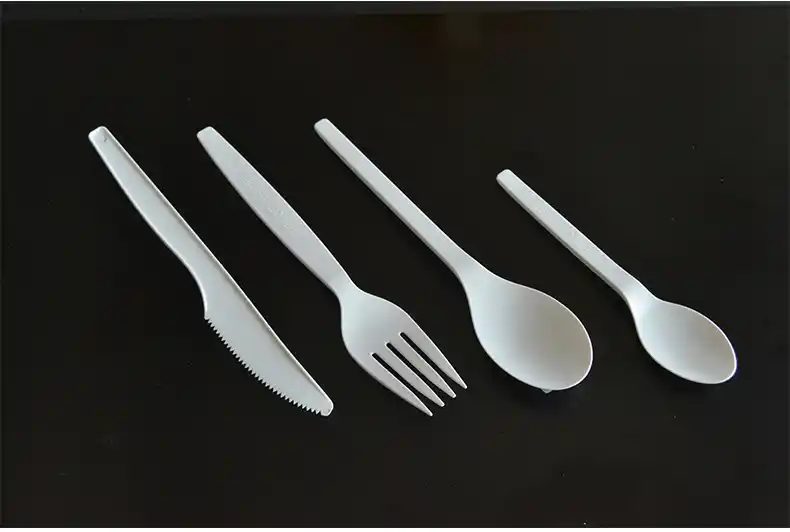
With the implementation of the new "plastic limit Order" and the improvement of people's ecological environmental awareness. Degradable compostable environmental tableware as an important factor to replace the traditional non-degradable plastic tableware. It is also an important part of our plastic pollution prevention and control work in Europe and Australia. People have high hopes and expectations. For example, bagasse, corn starch and other products research and development
In an increasingly environmentally conscious contemporary era, compostable and compostable lunch boxes have gained widespread popularity due to their environmentally friendly properties. These products are designed to reduce harm to the earth's environment and encourage people to use substances that can be naturally broken down, thus reducing the stress of waste disposal. However, there is a worrying new social phenomenon: with the popularity of this "environmentally friendly" tableware, some people began to relax the self-restraint of garbage sorting and discarding behavior, thinking that since the product can be degraded or composted, random throwing seems to become harmless. This phenomenon not only goes against the original intention of environmental protection, but also may lead to the further deterioration of the public environment. It is necessary for all sectors of society to work together to strengthen environmental protection education and guidance to the public to ensure the correct implementation of environmental protection actions.
What are degradable materials
Degradable materials refer to materials that can be biodecomposed under natural conditions, and compostable materials refer to a class of materials that can be biodecomposed under industrial composting conditions. Both of these materials have significant environmental advantages as they play a key role in treating waste and reducing landfill. In the natural environment, these materials are gradually broken down into water, carbon dioxide and biomass through the action of microorganisms, and eventually returned to the natural cycle, thus reducing the burden on the environment. This process not only reduces the pressure of waste disposal, but also helps to reduce greenhouse gas emissions, contributing to the sustainable development of the planet.
The neglected problem
When discussing the environmental impact of littering, we have to mention an often overlooked detail - even lunch boxes marketed as compostable or compostable can have a serious negative impact on the environment if not properly disposed of. Although such materials can decompose naturally under certain conditions, this process requires appropriate temperature and humidity conditions to proceed smoothly. However, when these lunch boxes are discarded at will, not only can not achieve its "environmental protection" design intention, but will aggravate the burden of urban solid waste treatment, and even pollute the land and water. Therefore, the correct disposal of this seemingly harmless waste is an indispensable step in achieving environmental protection goals.
In the current society, degradable lunch boxes are widely used to reduce the environmental pressure brought by traditional plastics. However, many of the public's understanding of this environmentally friendly product remains at the surface, thinking that since it is "degradable", it does not matter if it is discarded at will. This kind of psychology reflects a kind of neglect of environmental protection responsibility, or even a self-rationalizing escape behavior. From a deeper analysis, this behavior not only violates the concept of sustainable development, but also may lead to more waste of resources and further deterioration of the environment. Because even degradable materials need to complete the degradation process under specific conditions, discarding them will also cause a burden on the ecological environment and affect biodiversity. Therefore, to improve personal responsibility and properly handle degradable lunch boxes is not only responsible for themselves, but also a contribution to society and the environment.
It's like a seed that, if thrown out into the cold, may never germinate. The same goes for biodegradable plastics. If there is no suitable environment, it is difficult to achieve complete degradation
In the pursuit of environmentally friendly life today, degradable lunch boxes are widely respected for their environmental characteristics. However, even biodegradable products need to be treated in the right way to achieve their environmentally friendly properties. First of all, it is basic to classify the used lunch boxes into recycling bins; If conditions permit, it is more beneficial to the recycling of resources as a compost material. For example, shredding a cleaned lunch box and adding it to compost not only reduces composting time, but also provides the soil with rich organic matter. It is important to note that not all compostable lunch boxes are suitable for home composting, and some require a specific industrial composting environment. Therefore, it is important to know and follow the product's handling guidelines. The right approach not only minimizes the burden on the environment, but also helps drive sustainable lifestyle practices.
Education and guidance are crucial
In the process of promoting the proper handling of biodegradable food boxes, education and guidance are crucial. Enhancing public understanding and awareness of environmental protection through a variety of means, including school education, community advocacy and media communication, is the first step to achieving sustainable behavior change. For example, environmental protection courses can be carried out in schools, so that students can establish environmental awareness from an early age. The community can organize talks and exhibitions to show the proper use of biodegradable food boxes and their environmental benefits; The media can disseminate relevant knowledge to the public through vivid reports and case studies. In addition, governments and ngos should work together to develop policies and measures, such as giving incentives to individuals or businesses that correctly handle biodegradable food boxes, to encourage more people to participate in this action. Only when all sectors of society work together can a strong social environment for sustainable development be formed.
On this planet, each of us is a guardian of the environment. Although the market is full of all kinds of environmentally friendly products, it does not mean that we can slack off on environmental protection. In fact, true environmental action is much more than simply buying a biodegradable plastic bag or a stainless steel water bottle. It's about the daily habits of each of us, including how to dispose of waste properly, conserve resources and reduce our carbon footprint. Therefore, even if we use environmentally friendly products, we cannot use this as an excuse to litter. After all, environmental protection is a long-term and arduous task that requires each of us to work together and persevere. Let us start from ourselves and take practical actions to protect the environment on which we live.
Under the wave of plastic restriction, the rise and challenge of the degradable lunch box market: a new chapter of the Green Revolution
Degradable lunch box is really environmentally friendly
Related Article